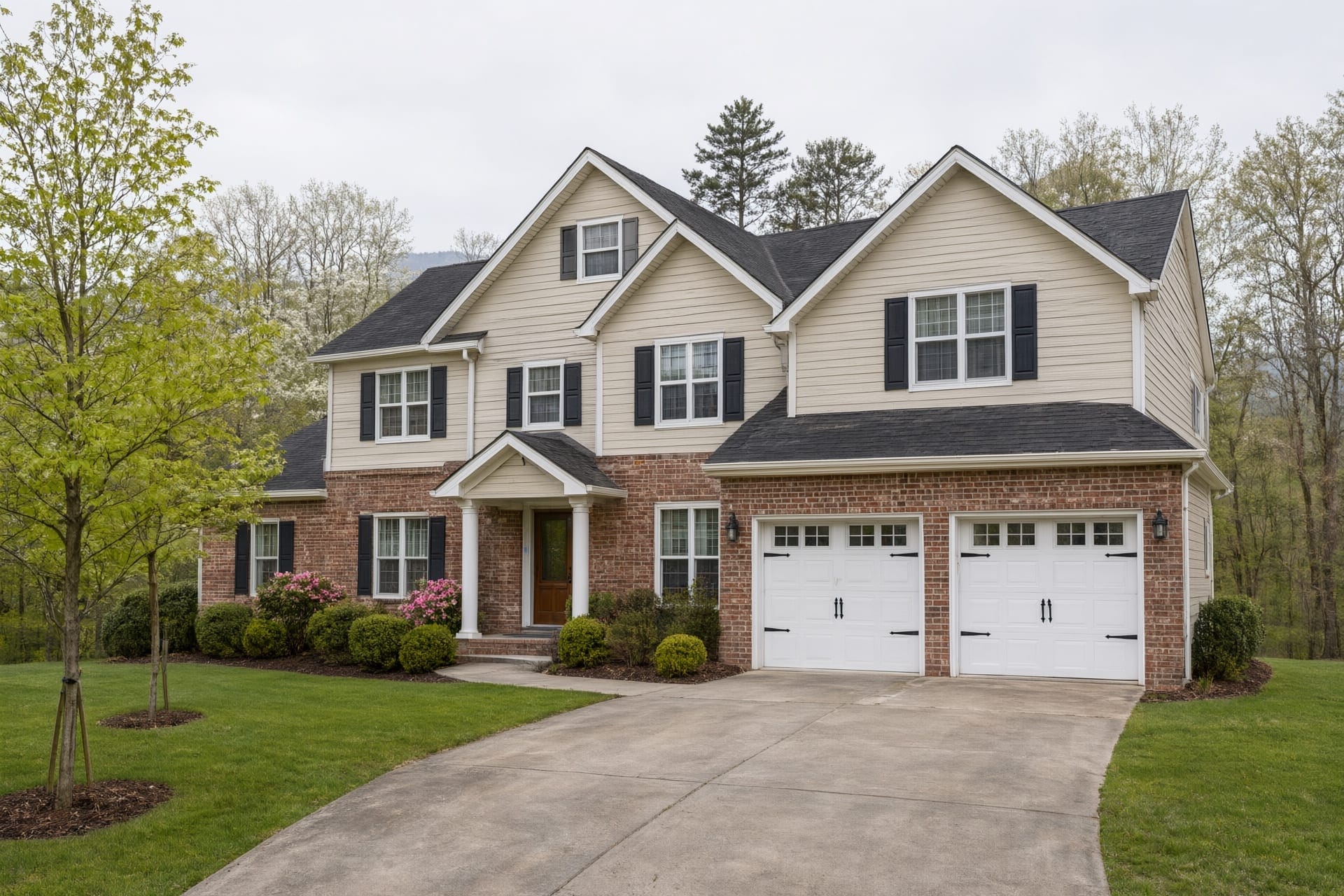
Mold Removal in Farragut, TN
Knoxville Superior Mold Remediation does mold removal in Farragut, TN the way we'd want it done in our own house. Attics, crawl spaces, basements, bathrooms, the wall behind the washer: if it's growing, we deal with it. Plastic containment goes up first, then the moldy drywall and insulation come out. The framing gets cleaned and treated. Nothing is called done until the post-remediation evaluation says so. The free mold inspection and the written quote come before any of that.
Farragut is about 15 miles west of downtown Knoxville, and our trucks are out Kingston Pike most weeks. Honestly, the attic is where Farragut keeps us busy. Big two-story houses, three or four bathrooms, and somebody back in 1996 ran the bath fans into the attic instead of through the roof. Our attic mold removal page walks through that job. Basements on the lake lots come second. Heading further down the pike? We also serve Lenoir City.
Containment on every job
Plastic walls, HEPA air scrubbers, a final check
Farragut Homes and Where Mold Shows Up
Farragut voted itself a town in 1980, so most of what you'll find here went up after that. Kingston Pike and Turkey Creek are lined with subdivisions from the 1980s, '90s and 2000s: tall two-stories, big attics, bonus rooms over the garage, a bathroom for everybody. Every one of those is a place where damp air can get stuck. We've been in a lot of them over our 30-plus years, and we see about 150 mold jobs a year across the area. The pattern repeats street after street.
Attics in 1990s Two-Story Homes
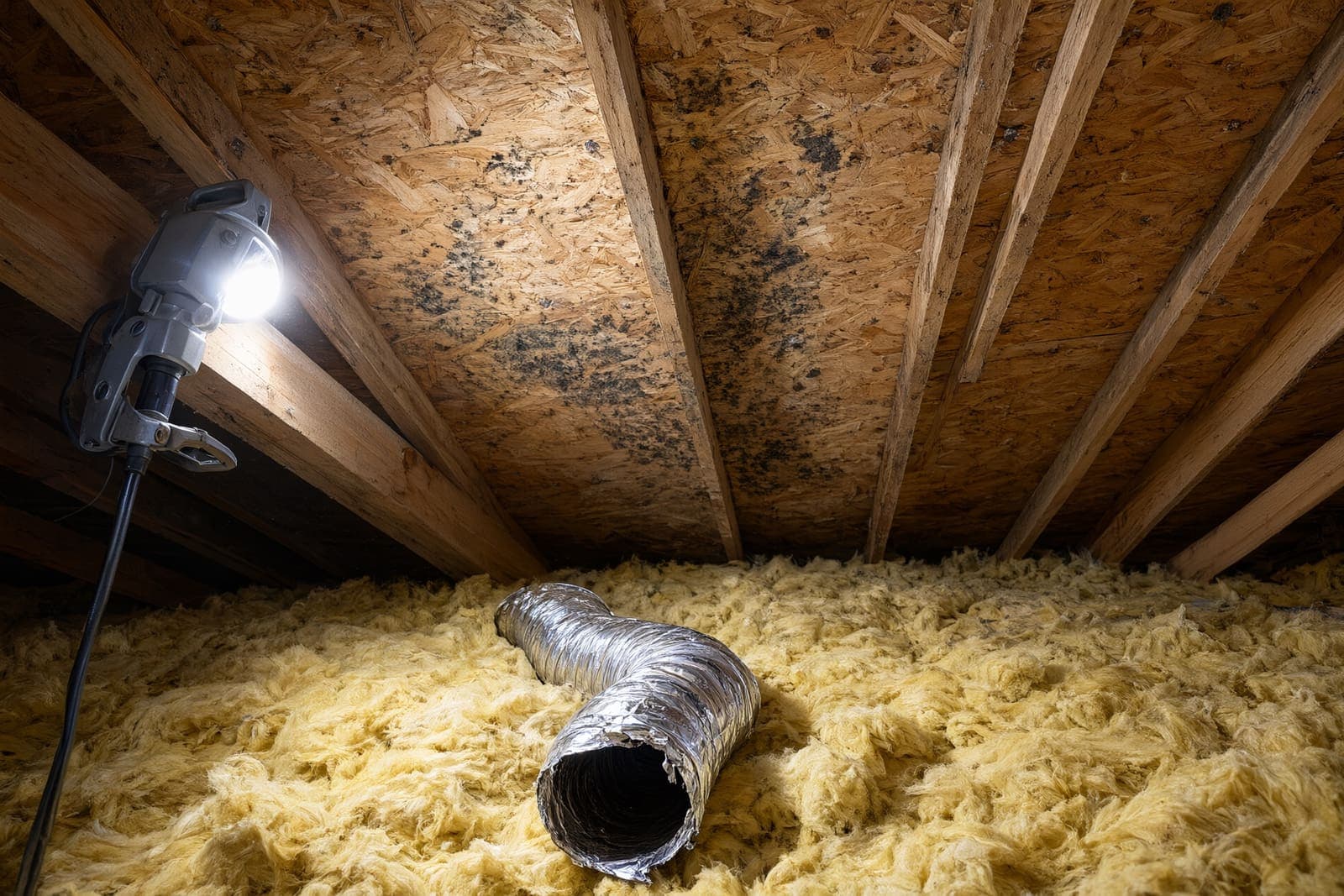
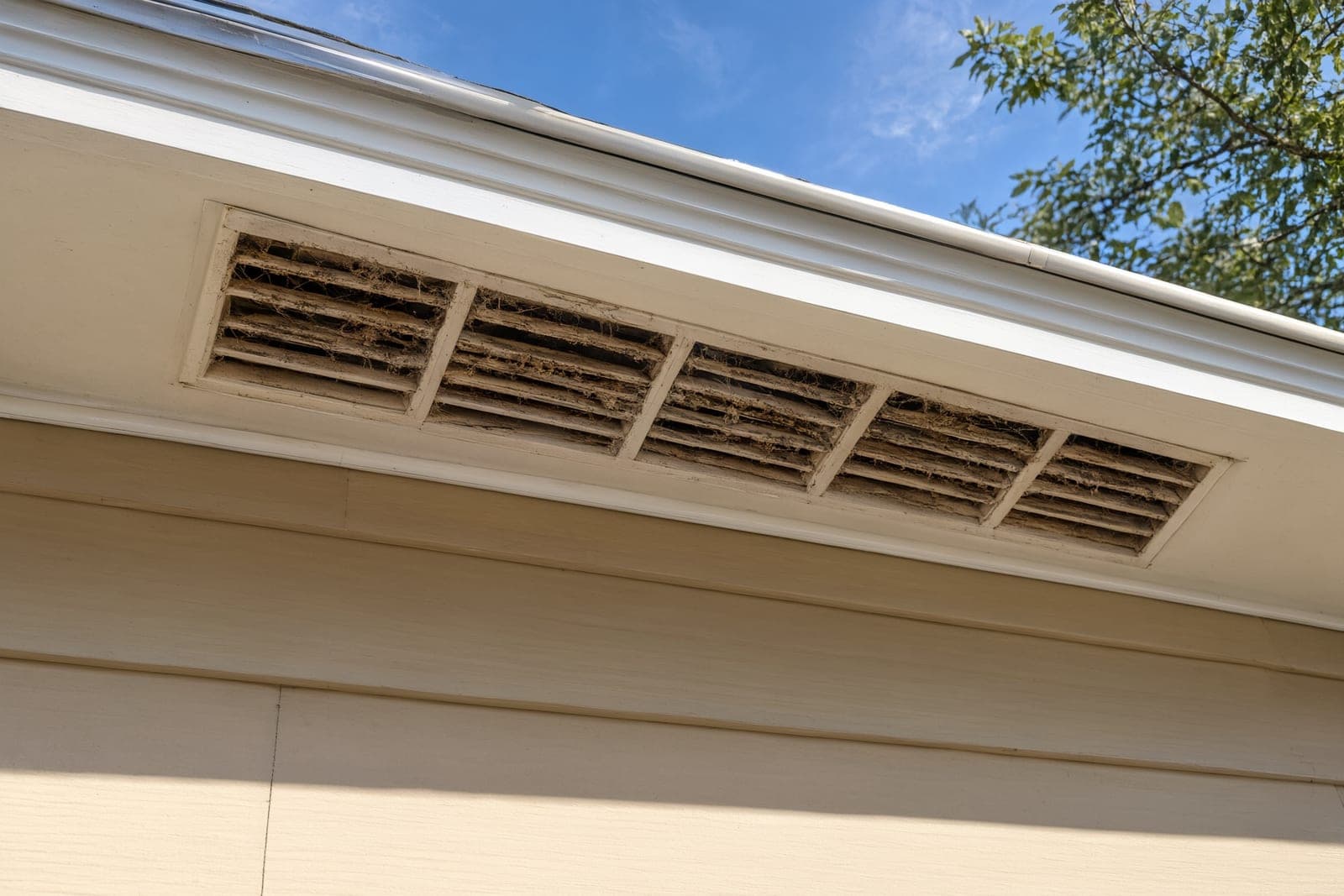
Here's the honest version: most Farragut attic mold isn't a roof problem. It's a bathroom exhaust fan dumping shower steam into the attic. In January that warm, wet air hits cold roof sheathing and turns to condensation, like breath on a car window. After a few winters the plywood or OSB goes gray, then black, usually on the north side first. Blocked soffit vents finish the job. The roof can be brand new and it still happens.
Lake Lots Near Concord and Fort Loudoun
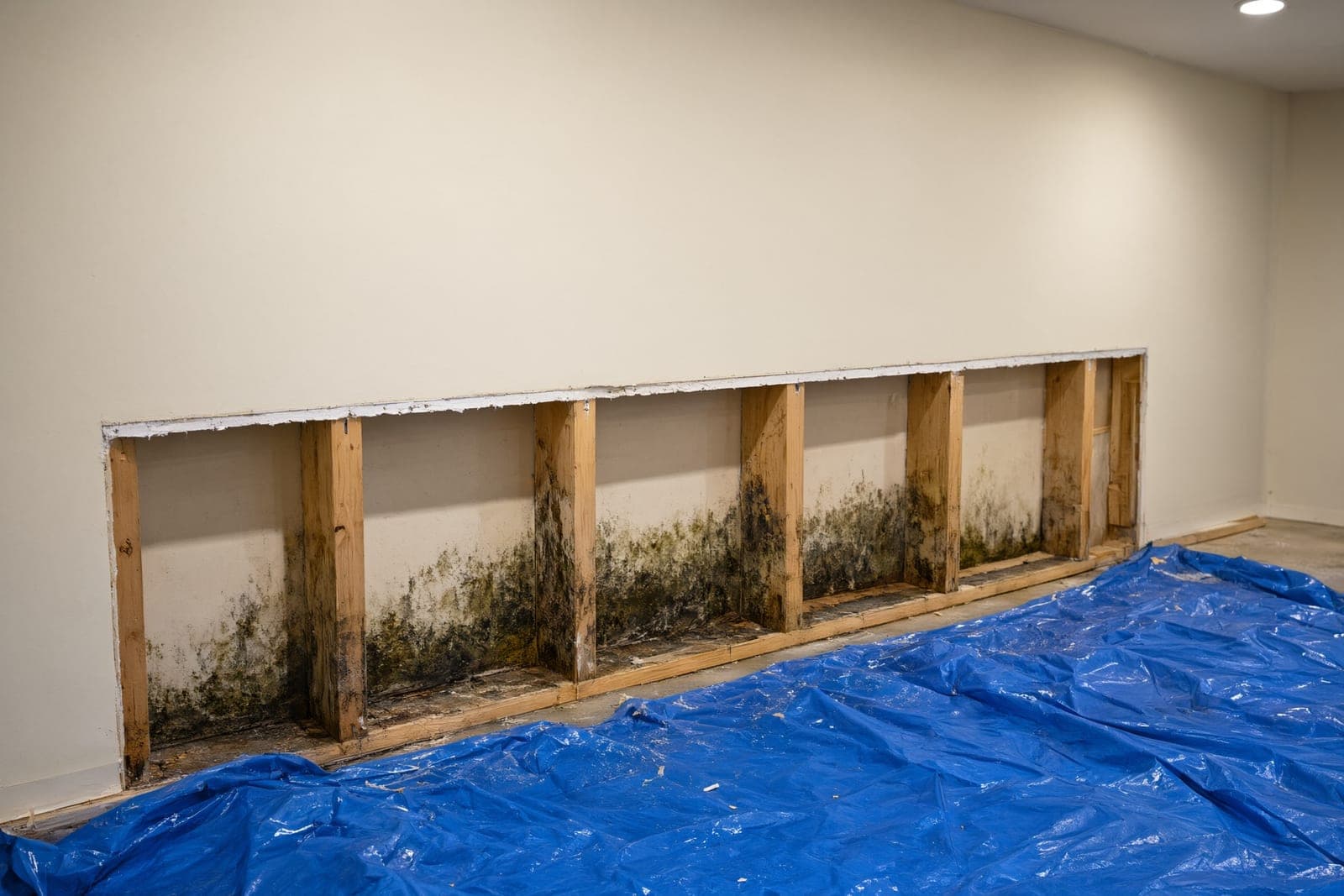
Down toward Fort Loudoun Lake and old Concord, houses sit on slopes with walk-out basements. The uphill wall is buried, and our red clay holds rainwater against it like a wet sponge. That wall is where we find damp drywall, a musty carpet pad and mold on the back side of finished walls that look fine from the room. The smell tells you before the wall does.
Crawl Spaces Under Older Ranch Homes
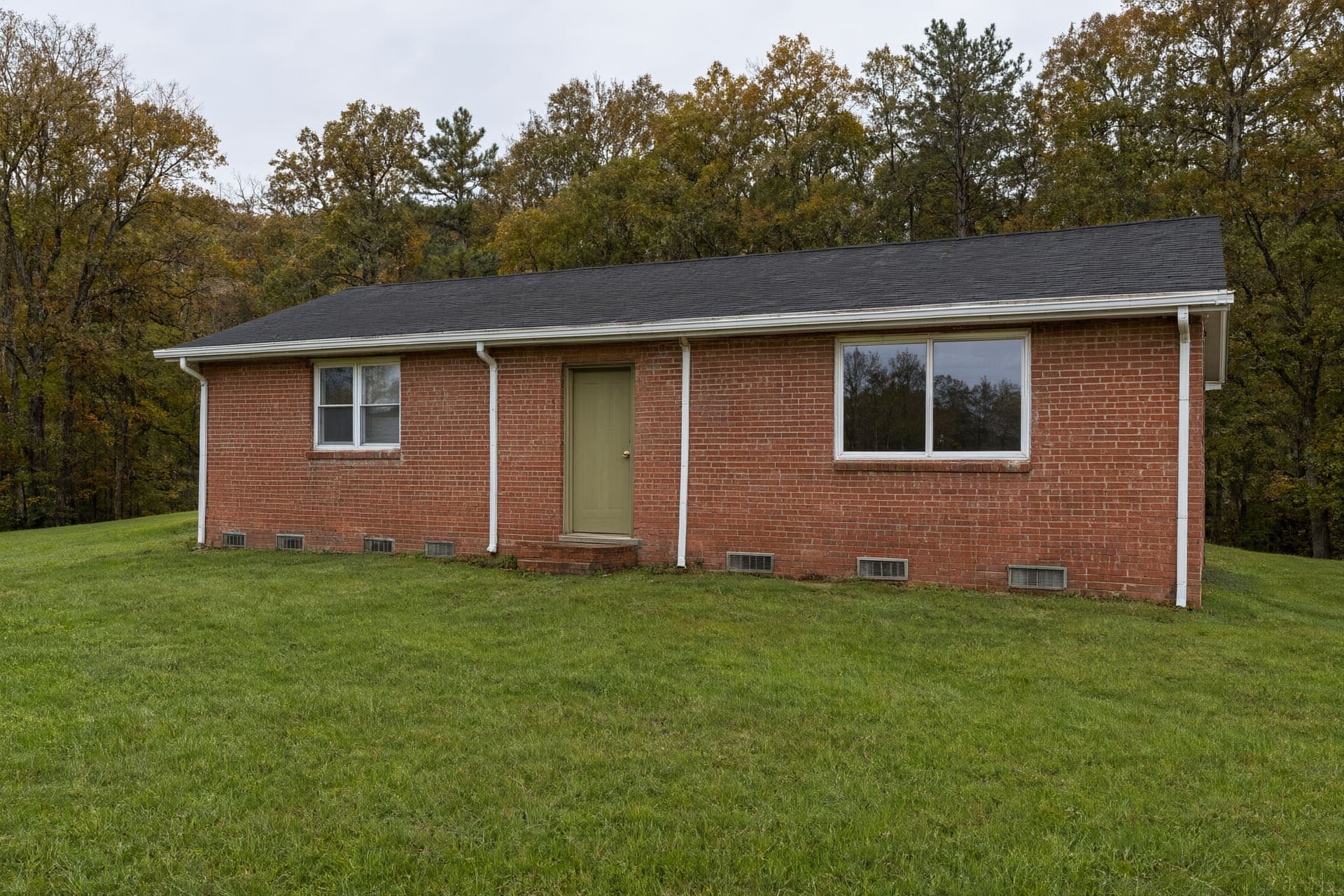
A few older pockets have brick ranches on crawl spaces with open foundation vents. Every August those vents pull in air you could drink, and it condenses on the cooler floor joists. Add a torn vapor barrier and you've got a garden somebody waters every night. We've cleaned more of these than we can count, and the fix is always moisture first, mold second.
How Does Farragut's Climate Affect Mold?
Farragut shares Knoxville's weather: average relative humidity around 71.5%, near 76% in August, and just under 52 inches of rain a year (NOAA figures). Mold gets going when indoor humidity stays above 60%, or when something wet isn't dried within 24 to 48 hours. That's the whole trick.
So a slow drip under a sink, a sweating duct in the attic or a crawl space that never dries out can start growth in a couple of weeks. Get it dry fast, keep the humidity down, and most mold never shows up. Dry wood doesn't grow mold.
You'll get a written moisture log with every job: the reading at every spot we tested, before and after. It's the easiest way to see the space really dried out.
Typical Mold Jobs in Farragut
| Problem | Usual cause | Typical scope | Time on site |
|---|---|---|---|
| Attic sheathing mold | Bath fans vented into the attic | Clean and seal the roof deck | 1 to 2 days |
| Basement wall mold | Groundwater on the uphill wall | Cut out drywall, dry, treat | 2 days |
| Crawl space mold | Humid air through vents | Clean joists, new vapor barrier | 2 to 3 days |
| Bathroom mold | Weak fan, no ventilation | Small cleanup, fan fix advice | Half a day |
One Farragut job sticks with us: a 1990s two-story where both upstairs bath fans had been vented straight into the attic since the house was built. Two days of cleaning and sealing the roof sheathing, $3,200 to $4,000 all in, and the homeowner's own HVAC tech re-routed the fans outside. We'd rather point you to the real cause than come back in three years.
Mold Removal Services We Offer in Farragut
These are the calls we get from Farragut most. Attics first, by a mile.
Attic Mold Removal
We clean mold off the roof sheathing and rafters, then seal the cleaned wood. Soaked fiberglass insulation comes out too. Then we show you the photos and the cause, whether it's a bath fan, blocked soffit vents or warm air leaking up from the house.
Basement Mold Removal
We remove moldy drywall, carpet pad and insulation from finished basements, dry the wall and treat the framing. If water keeps coming in, we can add an interior drain.
Crawl Space Mold Removal
We clean mold from the floor joists and the subfloor. Then the wood gets treated, sill plate included. A new vapor barrier keeps ground moisture down.
Bathroom and Wall Mold
Mold behind a shower wall or under a vanity almost always means a slow leak. We open the wall, take out the bad drywall and dry the cavity before anyone rebuilds. A patch smaller than a bath towel on tile? That one's a weekend job for you.
Mold Inspection and Testing
If you smell mold but can't see it, a mold inspection finds the wet spots behind the walls. A moisture meter and thermal imaging do the looking. Air sampling can be added.
Crawl Space Encapsulation
For crawl spaces that stay damp, encapsulation seals the space with a heavy liner, closes the vents and adds a crawl space dehumidifier.
Mold Removal in Farragut: FAQ
How much does mold removal cost in Farragut?
Most mold removal jobs in Farragut cost between $1,500 and $6,000. A small area under 10 square feet can cost under $1,500. Attic jobs usually run $1,500 to $6,000, and a full attic can reach $15,000. We give a written quote after a free inspection.
Why do Farragut attics get mold?
Most Farragut attic mold comes from moist air. Bathroom fans vented into the attic, blocked soffit vents and air leaks from the house below let warm, wet air reach the cold roof sheathing in winter. The water condenses on the wood and mold grows. Fixing the airflow stops it.
Can mold come back after removal?
Mold comes back when the moisture comes back. That's why we find the water first, whether it's a leak, a bath fan or high humidity, and we won't start the cleanup until the leak is fixed or on the schedule. Keep indoor humidity under 60% and mold has nothing to work with.
Does homeowners insurance pay for mold removal in Tennessee?
Most homeowners insurance pays for mold only when it comes from a sudden covered event, like a burst pipe. Mold from long-term humidity or a slow leak is usually excluded. Your adjuster decides, so call your insurer early. We can give you photos and a written scope for the claim.
Do you remove mold in lake homes near Fort Loudoun?
Yes, and they're some of our most common Farragut jobs. Lake homes near Fort Loudoun often have walk-out lower levels that stay damp. We remove the mold, dry the space and tell you whether a dehumidifier or an interior drain is the better fix for that wall.
How long does mold removal take?
Most Farragut jobs take one to three days. A bathroom or small closet can be done in half a day. Attics take one to two days, and crawl spaces two to three. Larger basements take longer if drywall has to come out and the space has to dry.
Smell It but Can't Find It? Start With a Free Inspection.
Tell us where you see it or smell it and roughly how old the house is. We find the water first, then give you a written quote.
Or call (865) 321-4111