Attic Mold Removal in Knoxville, TN
Knoxville Superior Mold Remediation does attic mold removal in Knoxville homes of every age, from 1920s bungalows to 2000s subdivisions. We clean mold off the roof sheathing and rafters, pull moldy insulation, treat and seal the wood, and find the bath fan or blocked vent that let warm, wet air collect under the roof. Nine attics out of ten, it's one of those two.
We do attic mold remediation in Knoxville and nearby towns including Farragut, Oak Ridge, Maryville, Powell and Lenoir City. A lot of our attic calls come from a buyer's inspection report, and we work to closing dates. Not sure the spots are mold at all? Start with a mold inspection.
Types of Attic Mold Remediation We Do
Attic mold lives on the wood, not floating in the air, which is good news: it's very fixable. These are the attic jobs we do most.
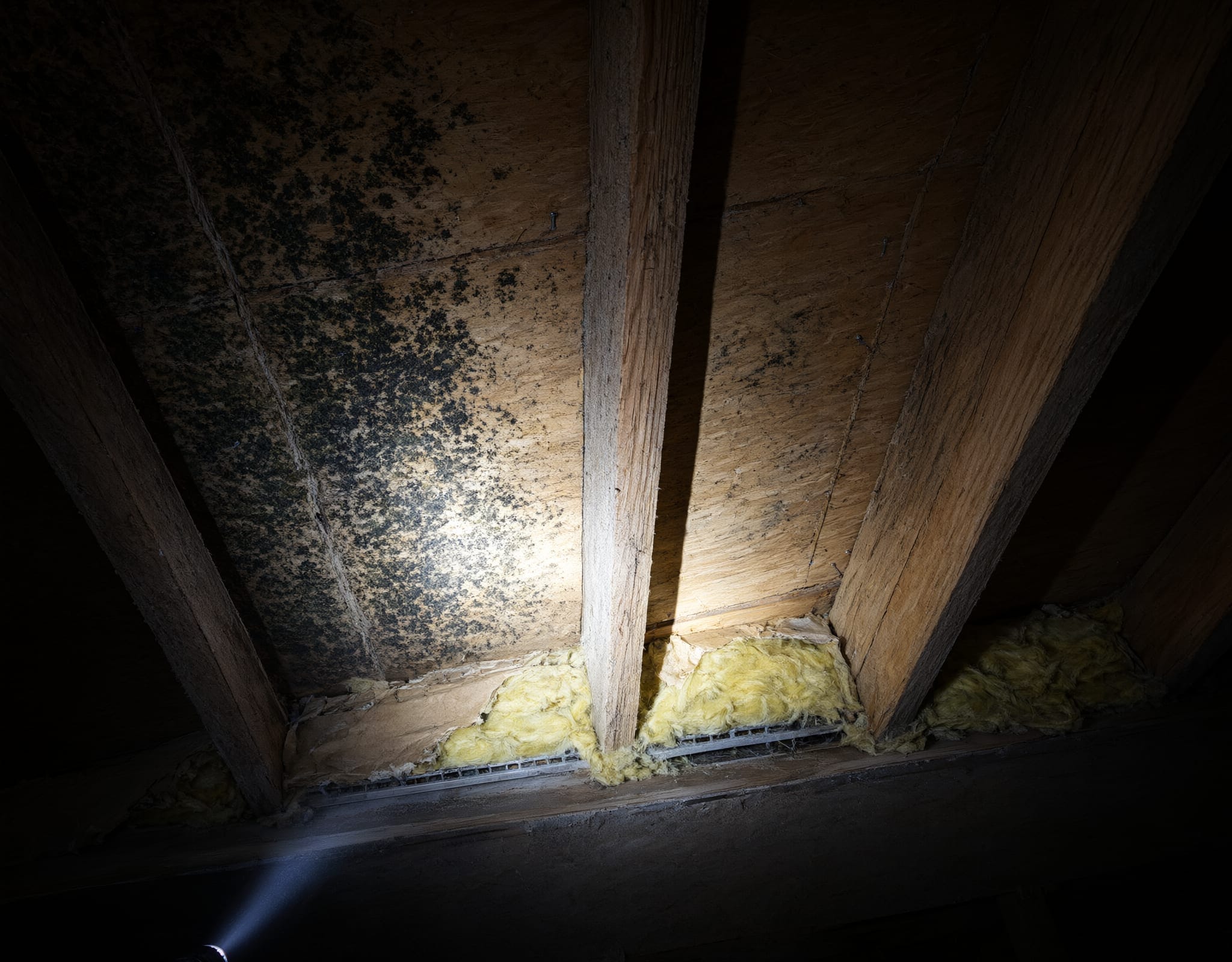
Roof Sheathing Mold
Roof sheathing is the plywood or OSB under your shingles. Mold on it looks like gray or black freckles, usually worst on the north slope. We've cleaned hundreds of these over 30 years, and the routine is the same: HEPA vacuum, clean and treat the boards, then seal them with an antimicrobial coating.
Mold on Rafters and Trusses
Rafters and trusses are the sloped beams that hold the roof up, the roof's ribs. Mold tends to run along them near the eaves, where the air barely moves. We clean them with the sheathing so nothing's left to reseed the boards next winter.
Mold Around Bathroom Exhaust Fans
A bathroom fan that blows into the attic instead of out through the roof puts warm, wet air right on the cold boards above it. We see a dark patch over the fan almost every time. Last year in Farragut it was two fans and two matching patches. We clean it and show you what needs re-routing.
Moldy Attic Insulation Removal
Insulation that got wet from a roof leak or condensation can grow mold and stops insulating well. We bag the moldy section, carry it out and clean the drywall under it, so the new insulation goes down on a clean surface. We don't sell insulation, so we only pull what's ruined.
Attic Mold From Roof Leaks
A leak around a vent pipe, the chimney or a roof valley soaks one patch of roof deck. Your roofer fixes the leak. We remove the mold and press on the boards and take readings to tell you whether that wood is still sound or needs replacing.
Blocked Soffit Vents and Poor Airflow
Soffit vents under the eaves let fresh air into the attic. When blown-in insulation buries them, moist air just sits under the roof. In our experience, clearing them and adding a few baffles fixes more attics than any spray ever will.
Why Knoxville Homeowners Choose Us for Attic Mold
- We find the fan, the vent or the leak before we clean
- HEPA vacuum and treatment on every stained board
- Containment at the hatch so attic dust stays in the attic
- Photos before and after, ready for a buyer
- We work to closing dates on home sales
- Free inspection and a written quote first
Towns we cover from Knoxville
Containment on every job
Plastic walls, HEPA air scrubbers, a final check
How Much Does Attic Mold Removal Cost in Knoxville?
Attic mold removal usually costs $1,500 to $6,000 for part of an attic and $6,000 to $15,000 for a whole attic with insulation replacement, according to HomeGuide's 2026 price guide. Most Knoxville jobs we see are partial: one side of the roof or the area over a bathroom.
| Item | Typical price | Source |
|---|---|---|
| Attic mold removal, partial | $1,500 to $6,000 | HomeGuide, 2026 |
| Attic mold removal, full | $6,000 to $15,000 | HomeGuide, 2026 |
| Mold inspection | $300 to $650 | HomeGuide, 2026 |
| Small area under 10 sq ft | $720 to $1,320 | MoldGuide Knoxville, 2026 |
These are published ranges. Your written quote depends on how much of the attic needs attic mold work and what we find once we're up there.
What Causes Mold in the Attic?
Mold in the attic comes from warm, wet air meeting cold roof boards. In winter the roof sheathing is the coldest surface in the house, so that's where the water lands. The usual suspects: bathroom fans vented into the attic, blocked soffit vents, a roof leak, and air leaking up around ceiling lights and the attic hatch. Honestly, the bath fan wins most of the time.
Signs of Attic Mold
- Gray or black spots on the underside of the roof boards
- A musty smell when you open the attic hatch
- Frost or water drops on nails in winter
- Damp or matted insulation
- A home inspector's note about staining in the attic
How We Remove Attic Mold
We set up containment at the hatch so dust stays up there and run a HEPA air scrubber. Then we HEPA vacuum the boards and clean and treat the wood. An antimicrobial coating seals it. Moldy insulation gets bagged and carried out. Then we take new readings and photos. Most attics are a one or two day job.
Attic Mold FAQ
Is attic mold a problem when I sell my house?
Often, yes. Home inspectors look in the attic and write up any staining on the roof boards, and most buyers ask for it fixed before closing. Cleaning and sealing the sheathing, fixing the cause and handing the buyer a written summary usually settles it. We do about 150 mold jobs a year, and plenty start with an inspection report.
Do I need a new roof if there is mold in the attic?
Usually not. Most attic mold is surface growth on sound wood, and it can be cleaned and sealed. A new roof is only needed when the sheathing is soft or rotted, which we check with a moisture meter and by pressing on the boards. We tell you if a roofer needs to look.
How long does attic mold removal take?
Most attic mold jobs take us one to two days. A full attic with all the insulation coming out can take three. We work from inside the attic with containment at the hatch, so you can stay home and go about your day while we're up there.
Can I just paint over attic mold?
Paint over it without cleaning and fixing the moisture, and the mold keeps going under the paint. A home inspector will still question it, too. The order that works: fix the venting, clean and treat the wood, then seal it. Skip the first step and you're mowing dandelions.
Why is attic mold worse on the north side of the roof?
The north side of the roof gets the least sun, so its sheathing stays colder and dries slower. Water condenses on the coldest boards first. That's why, in our experience, the worst spots are on the north slope and right over the bathrooms.
Smell It but Can't Find It? Start With a Free Inspection.
Tell us where you see it or smell it and roughly how old the house is. We find the water first, then give you a written quote.
Or call (865) 321-4111